Saturday, 2 February 2013

Futuristic Technology


Futuristic Technology Biography
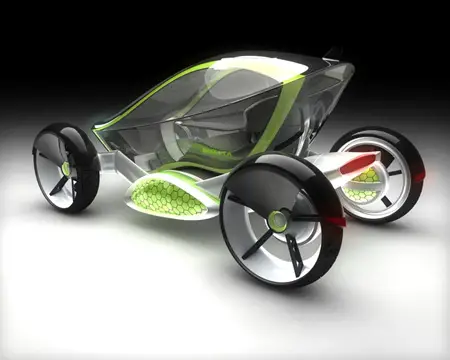
Retro-futurism took its current shape in the 1970s, a time when technology was rapidly changing. From the advent of the personal computer to the birth of the first test tube baby, this period was characterized by intense and rapid technological change. But many in the general public began to question whether applied science would achieve its earlier promise—that life would inevitably improve through technological progress. In the wake of the Vietnam war, environmental depredations, and the energy crisis, many commentators began to question the benefits of applied science. But they also wondered, sometimes in awe, sometimes in confusion, at the scientific positivism evinced by earlier generations. Retro-futurism “seeped into academic and popular culture in the 1960s and 1970s,” inflecting George Lucas’ Star Wars and the paintings of pop artist Kenny Scharf alike." [5] Surveying the optimistic futurism of the early twentieth century, the historians Joe Corn and Brian Horrigan remind us that retro-futurism is "a history of an idea, or a system of ideas--an ideology. The future, or course, does not exist except as an act of belief or imagination." [6]
[edit]Characteristics
Retro-futurism incorporates two overlapping trends which may be summarized as the future as seen from the past and the past as seen from the future.
The first trend, retro-futurism proper, is directly inspired by the imagined future which existed in the minds of writers, artists, and filmmakers in the pre-1960 period who attempted to predict the future, either in serious projections of existing technology (e.g. in magazines like Science and Invention) or in science fiction novels and stories. Such futuristic visions are refurbished and updated for the present, and offer a nostalgic, counterfactual image of what the future might have been, but is not.
The second trend is the inverse of the first: futuristic retro. It starts with the retro appeal of old styles of art, clothing, mores, and then grafts modern or futuristic technologies onto it, creating a mélange of past, present, and future elements. Steampunk, a term applying both to the retrojection of futuristic technology into an alternative Victorian age, and the application of neo-Victorian styles to modern technology, is a highly successful version of this second trend.
In practice, the two trends cannot be sharply distinguished, as they mutually contribute to similar visions. Retro-futurism of the first type is inevitably influenced by the scientific, technological, and social awareness of the present, and modern retro-futuristic creations are never simply copies of their pre-1960 inspirations; rather, they are given a new (often wry or ironic) twist by being seen from a modern perspective.
In the same way, futuristic retro owes much of its flavor to early science fiction (e.g. the works of Jules Verne and H. G. Wells), and in a quest for stylistic authenticity may continue to draw on writers and artists of the desired period.
Both retro-futuristic trends in themselves refer to no specific time. When a time period is supplied for a story, it might be a counterfactual present with unique technology; a fantastic version of the future; or an alternate past in which the imagined (fictitious or projected) inventions of the past were indeed real. Examples include the film Sky Captain and the World of Tomorrow, set in an imaginary 1939, and The Rocketeer franchise, set in 1938, both of which are also examples of the genre known as dieselpunk.[7]
Futuristic Technology

Futuristic Technology

Futuristic Technology


Health Technology


Health Technology Biography
Health technology is:
Any intervention that may be used to health, to prevent, diagnose or treat disease or for rehabilitation or long-term care.[1] This includes the pharmaceuticals, devices, procedures and organizational systems used in health care.[2]
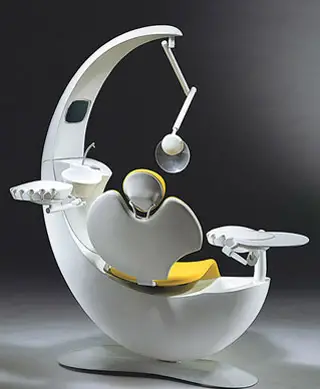
Medical Technology, which is a proper subset of health technology, encompasses a wide range of healthcare products and is used to diagnose, monitor or treat diseases or medical conditions affecting humans. Such technologies (applications of medical science) are intended to improve the quality of healthcare delivered through earlier diagnosis, less invasive treatment options and reductions in hospital stays and rehabilitation times.[3] Recent advances in medical technology have also focused on cost reduction. Medical technology may broadly include medical devices, information technology, biotech, and healthcare services.
Contents  [hide] 1 Definition of medical tech2 Allied professions3 See also
4 References]Definition of medical tech
Medical Technology extends and improves life. It alleviates pain, injury and handicap. Its role in healthcare is essential. Incessant medical technology innovation enhances the quality and effectiveness of care. Billions of patients worldwide depend on medical technology at home, at the doctor’s, at hospital and in nursing homes. Wheelchairs, pacemakers, orthopedic shoes, spectacles and contact lenses, insulin pens, hip prostheses, condoms, oxygen masks, dental floss, MRI scanners, pregnancy tests, surgical instruments, bandages, syringes, life-support machines: more than 500,000 products (10,000 generic groups) are available today. Medical technology represents only 6,3% of total healthcare expenditure in Europe - a modest share if you consider the benefits for every member of society.[4]
— Eucomed]Allied professions
The term medical technology may also refer to the duties performed by clinical laboratory professionals in various settings within the public and private sectors. The work of these professionals encompass clinical applications of chemistry, genetics, hematology, immunohematology (blood banking), immunology, microbiology, serology, urinalysis and miscellaneous body fluid analysis. These professionals may be referreto as Medical Technologists (MT) and Medical Laboratory Technologists.

Health Technology
Health Technology
Health Technology
Health Technology
Health Technology
Health Technology
Health Technology
Health Technology
Health Technology
Health Technology

Health Technology
Health Technology
Health Technology
Health Technology
Health Technology

Health Technology
Health Technology
Health Technology
Health Technology
Health Technology


Michigan Technological University

Michigan Technological University Biography
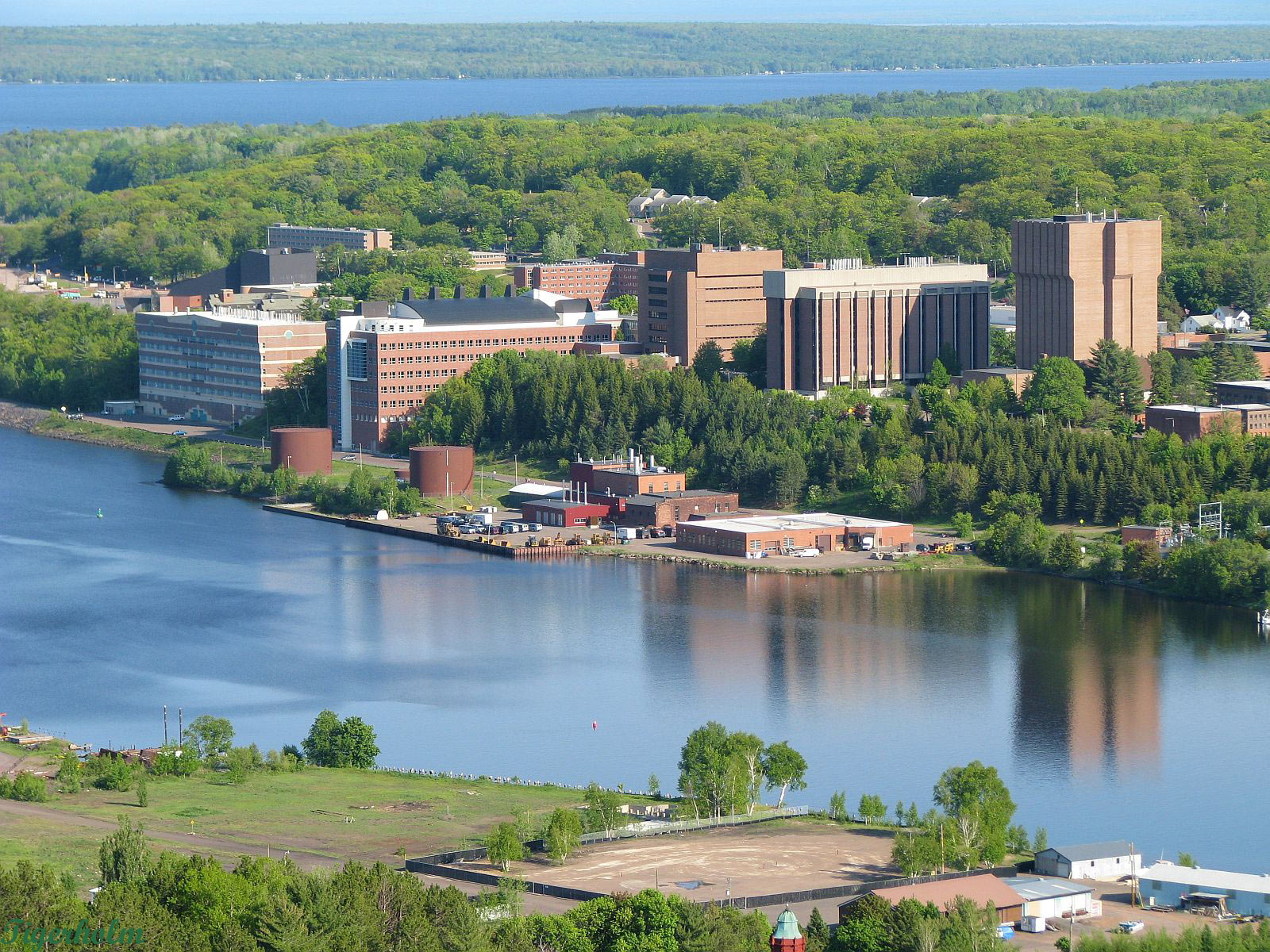
Michigan Tech was founded in 1885 as the Michigan Mining School.[7] After much agitation by Jay Abel Hubbell, the state legislature established the school to train mining engineers. Hubbell donated land for the school's first buildings.[8] The school started with four faculty members and twenty-three students. It was housed in the Houghton Fire Hall from 1886 through 1889.[9] A few years after the school's creation, enrollment grew to such a point that its name no longer reflected its purpose. The name was then changed to the Michigan College of Mines. This name lasted through World War I until 1925, but by this time the school had begun offering a wider variety of degrees and once again decided to change its name to the Michigan College of Mining and Technology. By 1931 enrollment had reached nearly 600. During the next few years, due to the Great Depression, money was scarce, causing department heads and even the president of the university, William Hotchkiss, to take pay cuts. Grover C. Dillman was president from 1935 to 1956. During this time, the school underwent many notable changes: a few of these include the construction of the Memorial Union Building and purchase of an ice rink and golf course. Around 1948, enrollment passed 2000 students total. In 1956, J. Robert Van Pelt became the new president of the university. He restarted many PhD programs and created a focus on research. This included the schools first analog computation class in 1956-1957.[10] In the final years of his presidency, the school changed from a college to a university, changing its name a final time to Michigan Technological University. The change from the Michigan College of Mining and Technology was necessary for two reasons, according to Van Pelt. First, the college had expanded too greatly and the current name was no longer an accurate title. Also, including "mining" in the name of the college was misleading.[11] The name Michigan Technological University was chosen in order to retain the nickname of Michigan Tech that had already been in use since 1927. Although engineering still accounts for some 59 percent of all enrollment as of fall 2010, the University now offers more than 130 degree programs. Along with the new name, Michigan Technological University, the school gained new constitutional status in 1964. The new status gave responsibility for control of the university to its Board of Control rather than legislature.[12]
Michigan Technological University

Michigan Technological University

Michigan Technological University